
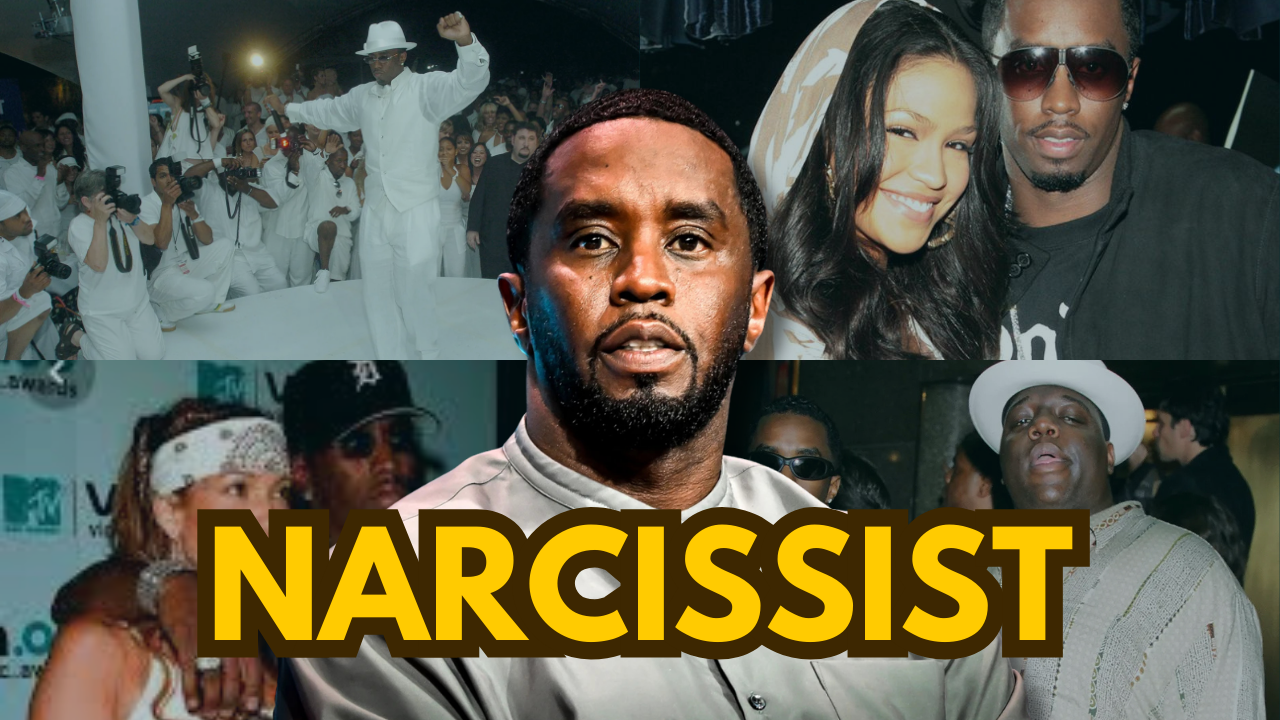
Why does it feel like Sean Combs was everywhere and nowhere at the same time?
A multi-hyphenate mogul. A self-made icon. A name that kept evolving: Puff Daddy, P. Diddy, Diddy, Brother Love.
But after his legal battles, we’re left wondering:
How did someone with this much visibility, this much power, manage to keep so much hidden?
Sadly, a lot of that comes down to branding and marketing.
For over 30 years, Sean Combs has delivered a masterclass in personal branding. A career built not just on music, fashion, and alcohol ventures, but on image. Control. Narrative. He built a lifestyle brand that defined hip-hop culture and reshaped pop culture at large in the late ’90s and early 2000s. And each reinvention sharpened his brand. Each name change was a repositioning. And each public move masked something more complex underneath.
We often think of branding as something companies do. But Diddy? He turned himself into a company. A product. A myth of his own making.
From rags to riches. From intern to icon. From the streets of Harlem to owning entire lanes in music, fashion, and spirits. His story looked like the American Dream. But that dream was curated. Marketed. Crafted to perfection.
Because while we were watching Diddy rise, we were also watching him perform. Every suit, every smile, every name change, it was all strategic.
And it worked. Until now.
This isn’t just a story about fame. It’s a marketing case study of how you can build a brand so huge that it becomes a shield that can hide something sinister in plain sight.
In this article, I break down the brand evolution of Sean Combs — how he used marketing to rise to cultural dominance, the reinventions that kept him relevant, and how the very brand that made him a mogul may have helped conceal his darkest truths. We’ll talk about his early days as Puff Daddy to his fall from grace. Or as I have decided to call it, the Icarus effect.
I’m not sure if this is used anywhere else cause I’ve never heard it, but I’m coining it now.
Let’s break it down.
PSST, reading isn’t your thing? You can watch the full video instead.
The Blueprint of a Brand (1990-1996)
It started with a hustle. A young intern at Uptown Records who acted like a CEO.
Sean Combs didn’t wait to be chosen. He pitched talent. He built relationships. He saw branding potential in artists before that language was common.
His genius wasn’t just in spotting talent, it was in crafting images. He was promoted to talent director at Uptown Records, where he played a pivotal role in shaping the careers of legends like Mary J. Blige and Jodeci.
With Mary J. Blige, he saw the future of R&B: aesthetic, market positioning, and cultural movements.
He understood something few others did: artists are brands. And the audience isn’t just buying the music; they’re buying the full story.
So when he got fired in 1993, he didn’t flinch. He founded Bad Boy Entertainment, signed Biggie, and began building not just a label, but a world.
A world where he was the star.
At the time, his early marketing blueprint centered on one idea: proximity to greatness. He made himself present in every visual. Diddy in the videos. Diddy on the hooks. Diddy in the interviews.
So much so, Suge Knight called him out at the 1995 Source Awards and created a whole hip hop culture moment:
But this was all a part of his strategy: saturation. Be everywhere.
He understood the power of being the face of the machine, and Bad Boy was a frontrunner in building hip hop culture at the time.
But branding is about consistency. And from the beginning, Diddy’s brand was one of confidence, control, and charisma. He didn’t just show up, he showed out. He wore the clothes, walked the walk, and positioned himself as both creator and curator.
His early rise also included smart collaborations by aligning with brands like MTV, BET, and The Source to amplify his reach. These were strategic brand placements to put Bad Boy in the same category as East Coast royalty.
He also used emerging platforms early—music videos, behind-the-scenes footage, and branded intros—to create a world of Bad Boy. When you saw the Bad Boy logo, you knew exactly what you were getting: flash, swagger, New York.
In a way, this section of his brand served as the “origin story,” and every strong brand has one. This was Diddy’s version of the garage startup.
What’s more impressive is that he wasn’t just marketing his artists; he was marketing himself alongside them.
Where Suge Knight and Dr. Dre positioned themselves behind the artists in the background, Puff walked right in front of the camera with them. He blurred the line between mogul and main character. And at the time, audiences ate it up.
That’s the thing about branding. It’s beyond what you build and more about how you insert yourself into the narrative. Diddy knew early on if he made himself indispensable to the story, no one could write him out of it.
The Rise of Puff Daddy (1997–2001)
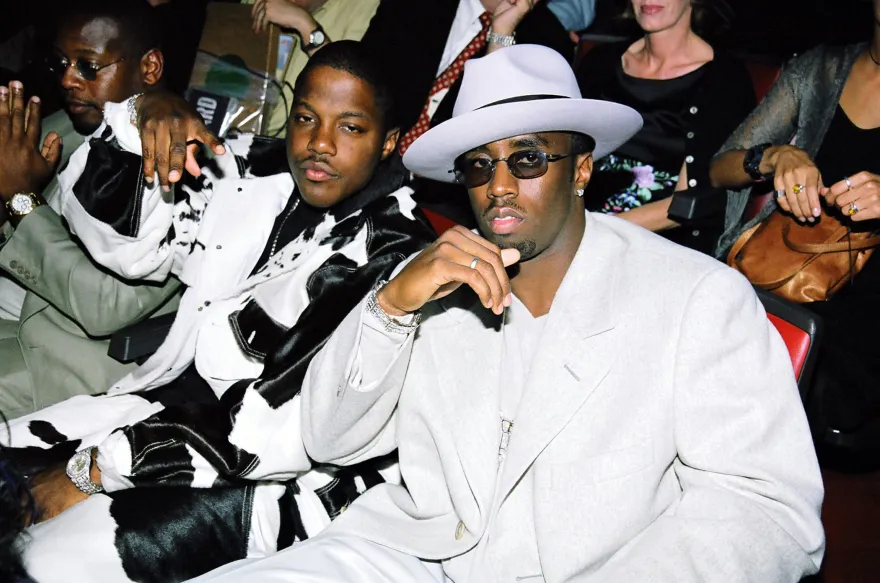
The death of Biggie in 1997 marked a turning point for Bad Boy Entertainment and Sean Combs’ brand.
In a single moment, he went from co-pilot to captain. From label founder to face of grief. Biggie was the identity of Bad Boy. When he died, the brand risked losing its anchor.
So Puff did what any brand strategist would do: he repositioned.
Enter: Puff Daddy, the solo star.
This was the birth of the Puff Daddy era, a rebrand rooted in glamor, aspiration, and opulence. Instead of fading into the shadows of loss, he stepped into the spotlight despite the controversy being like ‘yo, didn’t your best friend just die?”
Nevertheless, he released “No Way Out” with himself as the main act. Puff’s brand became synonymous with over-the-top luxury, including champagne, private jets, and all-white parties in the Hamptons. If Bad Boy was once gritty and cool, the Puff Daddy rebrand made it glossier, louder, flashier.
And this shift worked because it was marketed as survival. He wasn’t flexing, he was “healing”. He gave fans a narrative: a man overcoming grief, staying strong, shining for the ones he lost. He crafted a comeback arc, and it became central to his branding.
There’s a classic marketing principle at play here: “aspirational relatability.” Puff was larger than life, sure, but he was also wounded. You could root for him. He cried for Big. He threw the parties Big would’ve wanted (allegedly). He danced in his videos, not just for show, but as a tribute. Whether or not it was entirely genuine, he wanted us to feel that way. And that’s what branding is all about: emotional resonance.
At this stage, his branding was all about narrative control. And Puff Daddy became a case study in how to steer your story.
But more than that, he manufactured spectacle. Every music video was an event, remixes had a story, and dance moves built his brand more. He learned to make media coverage work for him, turning even criticism into fuel. Remember that MTV-era “Shiny Suit” backlash? Puff doubled down and made it fashion. Criticism was recast as envy. He leaned into it. And as a late millennial who was there for it, I vividly remember those shiny outfits and flashy videos everywhere on TV at the time.
But here’s the twist—while Puff Daddy the artist flourished, Puff Daddy the brand became increasingly distinct from the real Sean Combs. The persona began to eclipse the man. And as we’d see later, that brand shielded him in ways few people recognized at the time.
And the final branding touch? His omnipresence. Puff Daddy was on everyone’s hook. He mastered the ad-lib so much so that it became a sonic logo in itself, a branded watermark that let you know this was a Bad Boy track, because Puff Daddy made sure you heard him throughout the WHOLE song.
By the time the 2000s rolled around, Puff Daddy became a lifestyle. But even he knew this version of the brand couldn’t last forever.
And so came another reinvention.
P. Diddy & the Polished Empire (2001–2004)
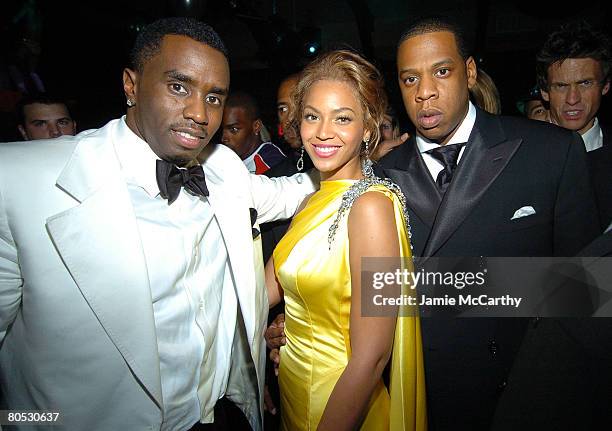
By 2001, Sean Combs had outgrown the flash and chaos of the “Puff Daddy” era. The brand was due for an upgrade. So, he pivoted.
He dropped the “Puff” and became simply P. Diddy.
It wasn’t just a new name—it was a new positioning. “P. Diddy” was polished, corporate, and clean-cut. It marked the start of Combs’ next major brand era: the mogul executive.
Where Puff Daddy was emotional and opulent, P. Diddy was refined and calculated. And this shift didn’t happen in isolation; it came in tandem with the expansion of his empire into fashion, television, and lifestyle ventures.
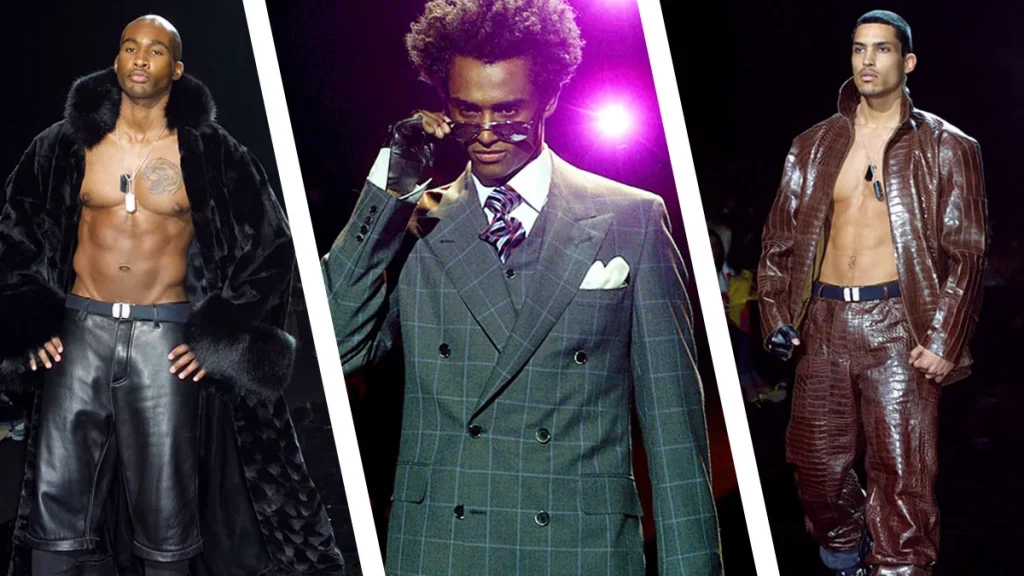
Let’s start with Sean John, his clothing line.
Founded in 1998 but really taking off in the early 2000s, Sean John was marketed as aspirational fashion, not just a streetwear line. It merged hip-hop aesthetics with high-end tailoring, and that tension—between hustle and luxury—was the brand. By 2004, Sean John had grossed over $100 million annually and was being sold in Macy’s and other department stores across the country.
It was a signal to the general public: “I’m not just in the culture. I am the culture.”
Then there was MTV’s Making the Band, which began in 2002. This wasn’t just a reality show. It was branding in motion.
P. Diddy cast himself as the harsh but visionary leader. He created a dynamic where he was the gatekeeper—the one who decides who makes it and who doesn’t. Every episode, every challenge—it was all about reinforcing his brand values: discipline, hustle, ambition.
Who can forget the iconic moment when he made contestants walk miles to get him cheesecake?
The show became so iconic that it was parodied by Dave Chappelle on the Chappelle’s Show with the unforgettable “Dylan, Dylan, Dylan” and “Cambodian breast milk” sketches. These parodies didn’t diminish his brand—they amplified it, turning P. Diddy into a cultural shorthand for power, success, and an unapologetic pursuit of greatness.
At this time, audiences saw Diddy as a boss. The show became a vehicle to humanize his mogul persona, while still amplifying his power. And let’s be real, who else could turn “walk to Brooklyn for cheesecake” into a defining pop culture moment?
This was all part of a brand architecture strategy. Instead of centering solely on music, Combs started crafting a web of interconnected brand extensions:
- Music (Bad Boy)
- Fashion (Sean John)
- Television (MTV show)
- Lifestyle (White parties and general glamorized “hip hop royalty” image)
Each venture reinforced the other. If you watched the show, you were reminded of Diddy’s authority in music, his clothes, and his mogul status. It was a feedback loop and it worked.
This era is also when Diddy mastered the art of brand licensing. Instead of doing everything himself, he lent his name and image to brands that wanted to tap into his cultural capital. He became the face of “executive credibility” in hip-hop.
This entire era was about prestige positioning. If Puff Daddy was a flex, P. Diddy was the Forbes List. He wanted you to see him as a CEO, not just a celebrity.
But there was still the music. Even as he expanded, P. Diddy never completely left music behind. Instead, he used it more sparingly, more strategically. Features. Remixes. The occasional album. The music served the brand now, not the other way around.
The result? P. Diddy became a brand ecosystem. A 360-degree personal enterprise. He was no longer just a figure in hip-hop; he was corporate hip-hop. He symbolized what it meant to cross over.
And in branding terms, he achieved what most artists only dream of: cultural omnipresence.
But that kind of visibility comes at a cost, especially for us as an audience looking back on everything now. Because when the brand is that strong, the man behind it starts to disappear.
The Diddy Empire (2005–2017)
If the P. Diddy era was about prestige positioning, then the next evolution—just Diddy—was about empire-building. The suits were still sharp, but the vision had scaled up. It wasn’t just about being a brand. It was about owning multiple brands.
Enter: the Diddy Empire.
This phase began in earnest in 2005, when Combs officially dropped the “P.” He told the world it was for simplicity, that people were “getting confused” with the name. But branding-wise, this was a power move.
The “P.” tied him to Puff Daddy and the flashy, over-the-top party persona of the 1990s. Shedding it was a deliberate statement: Puff Daddy was the past, Diddy was the future. This shift symbolized maturity, refinement, and a pivot toward becoming a global entrepreneur rather than just a music mogul.
Now that he was no longer tethered to his Puff Daddy roots, he wasn’t even really tied to the music industry anymore. The name Diddy was leaner, sleeker, and more global. It sounded like a household name, and that’s exactly what he was aiming for.
This era saw the rise of Diddy’s true mogul status. And it started with a vodka.
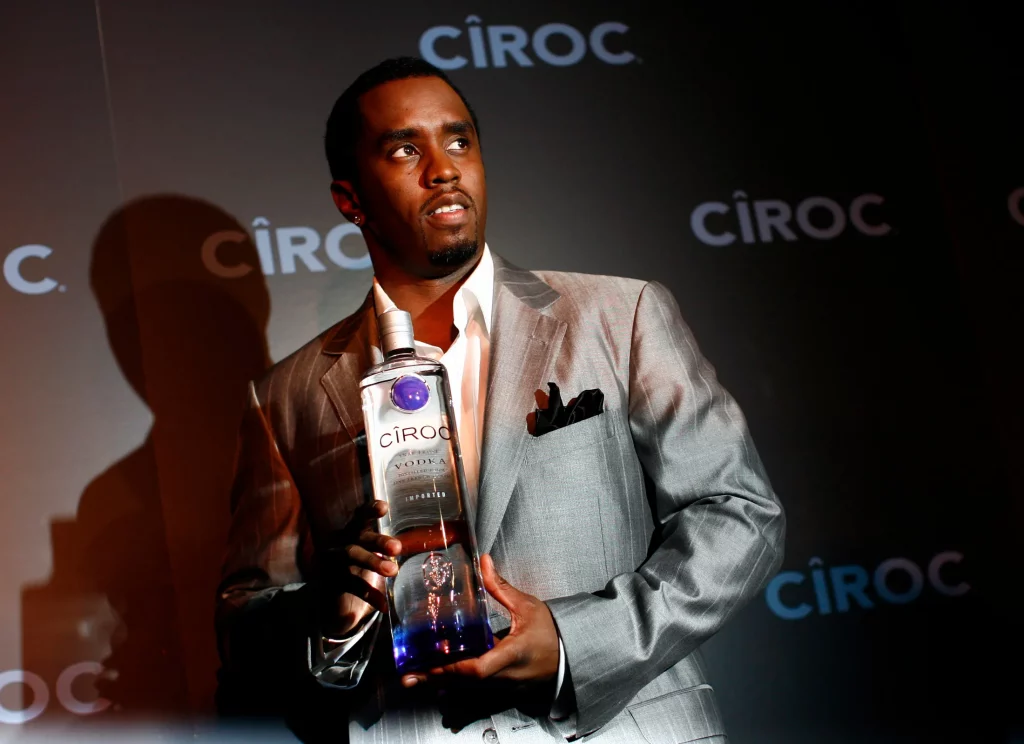
Cîroc was a relatively unknown French vodka brand when Diddy partnered with them in 2007. But this wasn’t just a celebrity endorsement. This was a co-branding strategy. Diddy negotiated a 50/50 profit split and took full creative control over the brand’s image.
Here’s what made this move so brilliant: Diddy understood that Cîroc wasn’t just selling vodka; it was selling a lifestyle. Through high-profile events, celebrity endorsements, and iconic ad campaigns (featuring himself, of course), Diddy positioned Cîroc as the vodka of choice for celebrations, exclusivity, and luxury. He made the brand synonymous with success, and in doing so, tied its identity to his own.
The message was simple: If you drink Cîroc, you’re on your Diddy-ish.
The results were staggering. In 2007, Cîroc was selling just 40,000 cases annually. By 2014, it had skyrocketed to over 2 million cases, cementing its place as a leader in the luxury spirits market. According to Forbes, this transformation was nothing short of revolutionary.
But Cîroc was just one spoke in the wheel.
Diddy also launched Revolt TV in 2013, his own cable music network aimed at giving Black creators and culture a new platform. The marketing framed him not just as a businessman, but a visionary. Someone committed to empowering the next generation. And yes, it doubled as another channel to promote Diddy-affiliated artists and products.
His white parties became annual events, carefully curated expressions of wealth and exclusivity. Attending one was a brand statement in itself. Being seen with Diddy meant something. He had mastered the art of social capital branding.
But the most powerful branding tool of all? Diddy himself.
Once he became a lifestyle, he wasn’t dropping albums as often, but he didn’t have to. His image, his quotes, his walk, his aura was the product.
Plus, he had artists signed to him at the time that would do that. Making the Band’s Da Band, Danity Kane, and Day 26. Cassie, Young Joc, B5 (one of my personal favourites), just to name a few.
And people bought Cîroc not because they loved vodka, but because they loved what Diddy represented. They watched Revolt not just for content, but because it was curated by a tastemaker. They followed his social media not for oversharing, but because he gave just enough to keep the mystique alive.
This was textbook influence marketing before that term even went mainstream.
By this point, Diddy had become one of the highest-paid entertainers in the world. Forbes named him the richest man in hip-hop. And he did it by branding himself as not just in the industry, but above it.
But here’s the catch: the stronger his brand became, the harder it was to see the man behind it.
Every move, every product, every quote was calculated. He built a fortress of brand architecture so intricate, it became nearly impenetrable.
And that’s where the next part of the story takes a darker turn.
Because eventually, even the strongest brand can’t hide what’s festering underneath.
The “Brother Love” Rebrand & the Cracks in the Image (2017–2023)
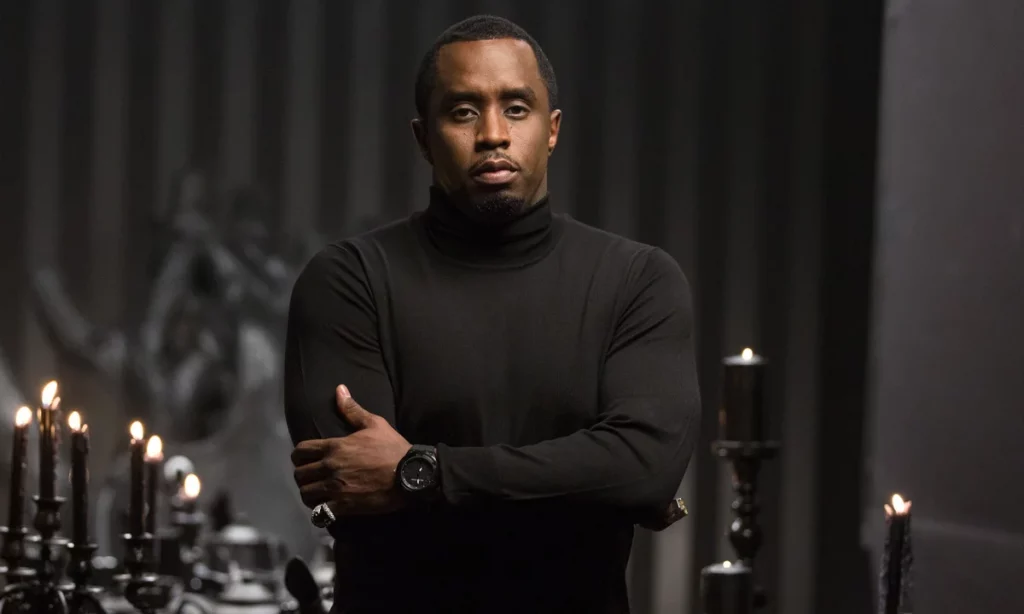
In 2017, Diddy announced another transformation. He was now “Brother Love.”
At first, it seemed like another rebrand—a softer, more spiritual shift. He tweeted, “I will not be answering to Diddy, Puff Daddy, Puffy, or any of my other monikers but Love or Brother Love.”
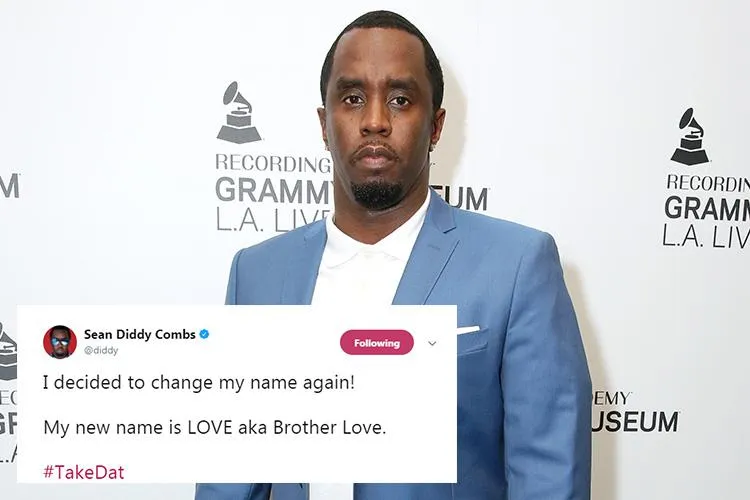
The public was… confused. Some joked about it. Others ignored it. But branding-wise, it was a clear signal. Diddy was trying to pivot once again this time toward legacy, peace, healing.
He followed it up by launching Love Records, a new label focused on R&B and “creating timeless music.” He gave interviews about wanting to lead with love, to inspire the next generation of artists. He even handed over publishing rights back to several former Bad Boy artists.
But the branding didn’t stick.
Why? Because the foundation was already starting to crack.
For years, whispers about Diddy’s business practices had simmered beneath the surface. But now, the whispers were getting louder. Former collaborators spoke up about exploitative contracts. Artists said they were silenced. Even Danity Kane’s Aubrey O’Day called out Diddy’s manipulation and abuse of power on social media.
The “Brother Love” persona was supposed to signal evolution. But instead, it highlighted the discrepancy between brand and behavior. For decades, Diddy had carefully managed his image by building an empire on charisma, exclusivity, and hustle. But now, the human behind the brand was being scrutinized and the branding couldn’t hold.
The “Brother Love” identity, meant to reframe him as a spiritual guide, a philanthropic leader, a cultural elder, was seen as hollow. It wasn’t authentic because the brand couldn’t outrun the truth.
Then came the lawsuits.
In 2023, multiple lawsuits were filed against Combs, alleging sexual misconduct, abuse, and coercion. One came from Cassie, his former partner of 10 years, and others followed. And suddenly, the fortress of branding—the one he’d built for decades—finally began to collapse.
The public no longer saw a mogul; they saw a manipulator. Someone who used branding as a smokescreen.
Because here’s the harsh truth in marketing: when your brand becomes too perfect, too untouchable, too shiny, people start to look for the cracks.
And once they find them? It’s game over.
What Diddy’s Empire Teaches Us About Using Image & Influence As A Weapon
Diddy didn’t just use branding as a business tool—he used it as a shield, weapon, and mirror to reflect what he wanted the world to see while obscuring what he didn’t want them to question.
This is one of the most fascinating (and disturbing) elements of his legacy. He leveraged every branding tactic in the book: reinvention, emotional storytelling, lifestyle alignment, scarcity, mystique, and association branding.
Let’s break every tactic he used down:
- Reinvention kept him relevant. Puff Daddy, P. Diddy, Diddy, Brother Love—each name was a reset button, allowing him to rewrite the narrative before the old one caught up to him.
- Emotional storytelling built trust. From “I’ll Be Missing You” after Biggie’s death to gifting publishing rights in the Brother Love era, he created moments that felt generous, even if they masked something else.
- Lifestyle branding made people want to buy into his world. Whether it was Cîroc, fashion, or music, everything was positioned around aspiration and exclusivity.
- Mystique and scarcity allowed him to control the narrative. He wasn’t always oversharing, but he gave just enough to keep people intrigued.
- Association branding kept his name in the spotlight through collaboration. Through new artists, labels, and ventures, Diddy made sure you always saw him next to someone younger, hotter, or more current.
This playbook isn’t just a case study in marketing; it’s a cautionary tale.
Because branding, when wielded powerfully, can also silence dissent, rewrite history, and delay accountability.
And when that branding finally collapses? It can feel like betrayal. Not only just because someone did something terrible, but because they fooled you into thinking they were someone they weren’t.
This is why Diddy’s story is so jarring. Because many of us, myself included, grew up with his brand. We saw the champagne toasts, the white parties, the confidence, the hustle. He was the blueprint for Black excellence in media for a long time.
But that’s exactly what branding is. It’s a carefully curated blueprint of perception.
So what does this teach us?
That a strong brand can be powerful, but unchecked, it can also be dangerous. That authenticity is more than reinvention; it’s about alignment between your image and your impact. That influence without accountability isn’t branding, it’s manipulation.
And that maybe… the truth was hiding in plain sight all along.
So, what do we do with this?
As people who consume media, who engage with brands, who fall in love with celebrity personas, we have to stay critical.
Diddy’s rise and fall is a masterclass in personal branding, yes. But it’s also a warning: the louder the image, the more important it is to look behind it.
Let’s talk in the comments: What surprised you most about Diddy’s branding journey?
Until next time, Marketeers—stay sharp, stay curious, and remember: sometimes good branding can hide dark truths.